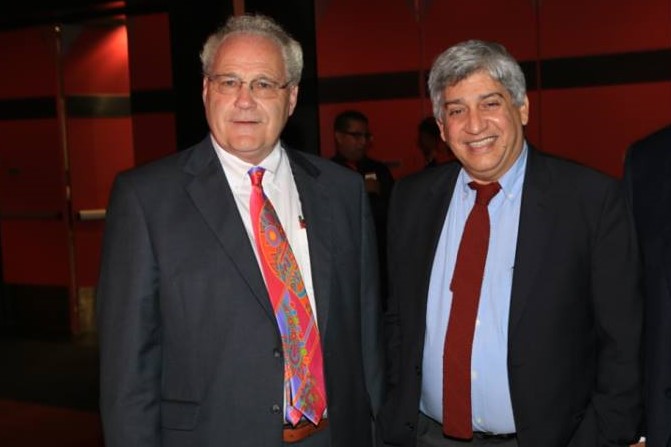
The Southern African Society for Co-operative Education (SASCE) recently launched “The African Journal for Work-Based Learning’ at the National Skills Conference. Shakeel Ori, President of SASCE, said that while the journal is new, co-operative education and work-based learning are not. These have been practiced in the world for many decades and have been the mainstay of many trade qualifications. The journal will address the interface between work and learning which is seen to be problematic.
Co-operative Education is a philosophy of learning that promotes the concept of enhanced learning experiences for students based on a partnership between education institutions and industry, commerce and the public sector. The success of co-operative education is that students are able to graduate with the competitive advantage of entering the world of work with accredited work experience related to their qualification disciplines. Universities and colleges are keen to ensure that their graduates are valuable assets in the workplaces. There is however a mismatch between the graduate output of the universities and colleges and the expectations of the workplaces. Internationally we have seen renewed interest in academic learning becoming integrated with work-based learning and vice versa.
Last year South Africa hosted the 18th WACE World Conference on Work and Learning. Academics from over 18 countries from across the globe participated in the conference. The theme was WIL- power: fuelling the future workforce” and 79 concurrent sessions took place over the week on skills development, employability and employment. Site tours to industry to see WIL in action took place at Toyota, Unilever, SA Breweries and the South African navy training ship called the SA Agulhas. The Agulhas represented an excellent example of WIL with its onboard simulator and classrooms
WIL is an acronym for work integrated learning and is the integration of academic learning with work learning. Dr. Ronel Blom from the University of Wits Centre for Researching Education and Labour (REAL) says that first and foremost WIL is about learning, and not about working. Work is the vehicle for the learning. Employers benefit from their involvement and participation in the process, not least by being able to identify the best new potential entrants to their workplaces. Further employability is about gaining those attributes that make a young person attractive as an employee, but it does not necessarily equate to employment, nor should it create the expectation that it does. WIL and employability are not solutions to unemployment. Rather, they enhance the learner’s chances for a better fit and seamless transition to work. It would therefore be wrong to create the impression that if every young person gained an opportunity to undertake some form of work- based learning, the unemployment rate in South Africa would be reduced.
Work experiences enrich the learning experiences and reduce the mismatch between educational outcomes and the workplace requirements. It then becomes important to measure to what extent does the students experiences in the work place influence and is integrated into the university or colleges curriculum. Of course this is not enough, for WIL to have its full benefit; we need to ensure that the regulatory environment is conducive to practice. If every workplace is to become a training space, the education and training system together with business and industry, should be incentivised to undertake the necessary work to encourage implementation.
SASCE decided on the name of ‘African Journal of Work Integrated Learning’ to reflect a focus on the continent and its needs. African economies, more often than not, cannot be compared to the economies of first world countries and work placements are, therefore, not the simple matter they seem to be in developed economies. Home grown solutions are consequently called for. Journal contributions are welcome in all aspects of cooperative education, work based learning, WIL, service learning, learnerships, skills development and community based learning as it relates the African context. Dr. Ronel Blom is acting editor of the journal and contributions can be emailed to her on Ronel.Blom@wits.ac.za /+27 11 717 3071