South Africa Summarised – from an Expat perspective – June 2016:
My wife and I have been living in Australia for 17 years, and it’s been over 10 years since our last visit to SA. I have a daughter and a granddaughter still living in South Africa.
Please note that this is only my personal perspective on how things stand, based on a recent visit to SA in June 2016. Most of the opinions and views I encountered during this visit were those of our ‘white’ South African friends and family so don’t necessarily reflect the majority viewpoint.
Overseas and social media certainly paint a grim picture of South Africa, cloaked in out of control crime and corruption. We had also become ‘soft’ having lived in Australia for so long. I am not joking when I say that we were convinced by other family members to first renew our wills before making the trip. We were therefore quite anxious about going back for a visit to say the least, but looking forward to catching up with friends and family.
Upon arrival into KZN our fears were fuelled by news of violent strikes taking place in Durban, followed by an armed robbery at the Pavilion shopping centre the next day.
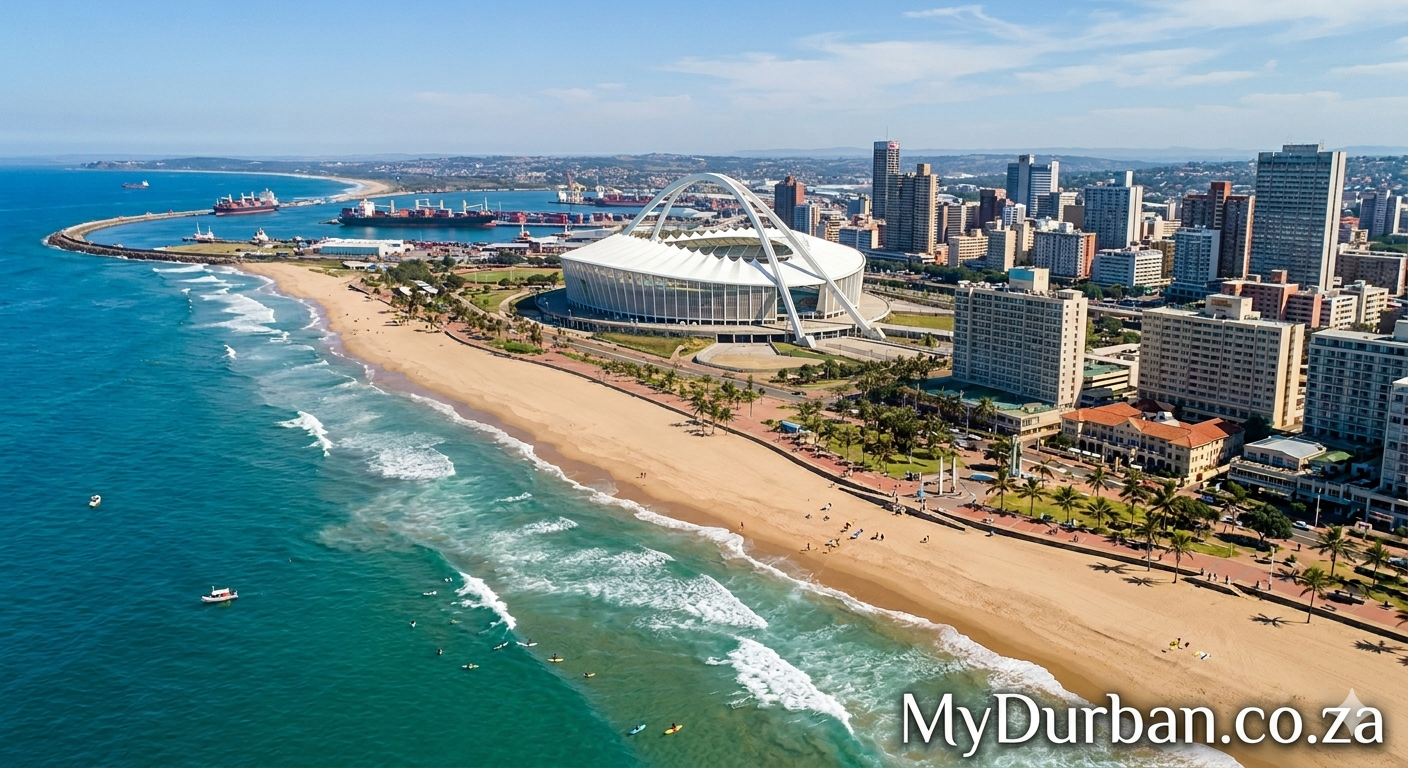
These fears were then overshadowed by appreciation for the beautiful beaches of Ballito, where we spent the first few nights, and even more so when we were visited by my daughter and granddaughter and some good friends. Re-uniting with friends and family is priceless.
The nostalgia of being back in our country of birth is hard to describe, it’s a combination of sounds, sights and smells that bring back the memories. Some of these were obvious, such as the taste and smell of biltong, boerewors & samosas (yes, we get these all in Oz but they aren’t quite as good) and watching a game of ‘real’ rugby on the big screen with seriously enthusiastic Bok supporters, while other feelings surprised us, such as seeing a troop of monkeys crossing the road, the sound of hadadas in the morning, mole hills on people’s verges, the tribal dance conducted each morning by our hotel staff, having someone else put your petrol in your car for you and the salty humidity of the KZN coastline.
In terms of change, what struck us first was the extent to which ‘black’ people appear to have been successfully integrated into the workforce. The level of customer service we encountered, and overall professionalism was impressive. Adverts on the radio proudly announced the BEE rating of the businesses being advertised (Black Economic Empowerment (BEE) is a racially selective programme launched by the South African government to redress the inequalities of Apartheid by giving certain previously disadvantaged groups of South African citizens economic privileges previously not available to them.)
Naturally once we got chatting with some of our ‘white’ friends we were reminded that there is a flip side to this, in that it is now very difficult for ‘white’ people to get employment, especially when you take South Africa’s official unemployment rate of 27%, coupled with BEE. Even small business owners (who are not required to comply with BEE) have difficulty securing contracts if their ownership and management constituency does not reflect an attempt to comply with BEE values. It was strange for us to encounter ‘white’ people begging on the streets.
We met up with quite a number of our friends and family, some self-employed, some still working for corporate organisations and some unemployed, and it was interesting to find such a varied view on how things stand. Some were optimistic about the future of SA while others were quite disillusioned and negative. One common thread was a complete lack of respect for the current president and his government, and concerns about the ever escalating levels of crime and corruption.
The government has imposed restrictions on what print, radio and TV media may or may not cover and so one must rely on social media and private security communication structures to keep informed about what is happening and where dangers might lie. Despite these restrictions it was still disturbing to hear in the media about the extent of violent crimes and corruption taking place every day, all around us, even police being involved in looting.
We went on to visit Durban, Pinetown, Westville, New Germany, Kloof and Hillcrest, Cape Town and the Drakensberg. Those that can afford it now live in ‘gated communities’ and many of the older established neighbourhoods now have manned boom gates controlling who comes in and out of each street. It seems that the majority of wealthy ‘white’ people still living in KZN have congregated into various hubs on the North Coast and inland around Kloof / Hillcrest. Some areas like Pinetown and Durban central, which were once buzzing with shoppers, seem to have been abandoned and now look more like third world townships. Most people that we met still living in KZN or Gauteng had hopes or plans to one-day relocate to Cape Town.
It was good to see that some tax-payer’s money was filtering through the webs of corruption and finding itself invested in new developments and infrastructure. This was a positive sign that the country has not collapsed into a heap of rubble.
Cape Town was a highlight for us and seems to have remained just as popular and beautiful as it was when we last visited 17 years ago. The Berg was absolutely fantastic, although recent attacks on hikers have resulted in a down-turn for tourism in the area.
Other points worth mentioning:
- The local food and beers were superb, and approximately half the price of Australia in real terms. I would give the SA cuisine 95%.
- Growing up in SA we were lucky to enjoy a wide range of local and international popular music on the radio. “South Africa’s national broadcaster SABC has now introduced a new quota system, requiring 90% of the music played on its 18 radio stations to be homegrown”. Perhaps a great idea in principle but definitely did not work for us, we found ourselves flicking through channels whenever we were in the car, trying to find something decent to listen to.
- Car guards can be an irritation but when you think about the fact that their presence does reduce crime then they should be appreciated.
- Tipping in restaurants and in just about every other service industry is also irritating but remember that the minimum wage in SA is about ¼ of that in Australia so bearing in mind that the price of goods is incredibly cheap, you might consider giving a tip if the service is to your satisfaction.
I would definitely recommend South Africa as a destination for travellers coming from Australia and elsewhere. The culture, landscapes, cuisine and winter weather are amongst the most fascinating in the world.
It is no secret that crime is very high in SA (more than 17 000 murders pa and over 54 000 reported sexual crimes pa) – the razor wire on the fences around most houses and businesses is a grim reminder of this, so take some simple precautions: Ask locals where is safe and not safe to travel, try to avoid travelling at night, keep your car doors locked, keep valuables out of sight, always be on the alert for danger, don’t go on a “tour of the township” as it is not only dangerous but also offensive to locals, and learn the basics of what to do in the case of a car hijacking or other unforeseen circumstances (for example don’t look the perpetrator in the eye) etc
Apartheid was formally in place for 46 years (from 1948 to 1994) and it has only been 22 years since it’s abolition. I would hope to see within the next 22 years that equality will have been satisfactorily established and modern discriminatory measures such as BEE can finally be abandoned as being no longer necessary. In other words, finally equal opportunity for ALL South Africans. Failing this South Africa might well follow the plight of almost every other country in Africa.
Anton Colenbrander
CLICK HERE to submit your press release to MyPR.co.za.
Full article here: Durban – MyPR – Guest PR
Click HERE to submit your Durban / Kwazulu-Natal Press Release.
