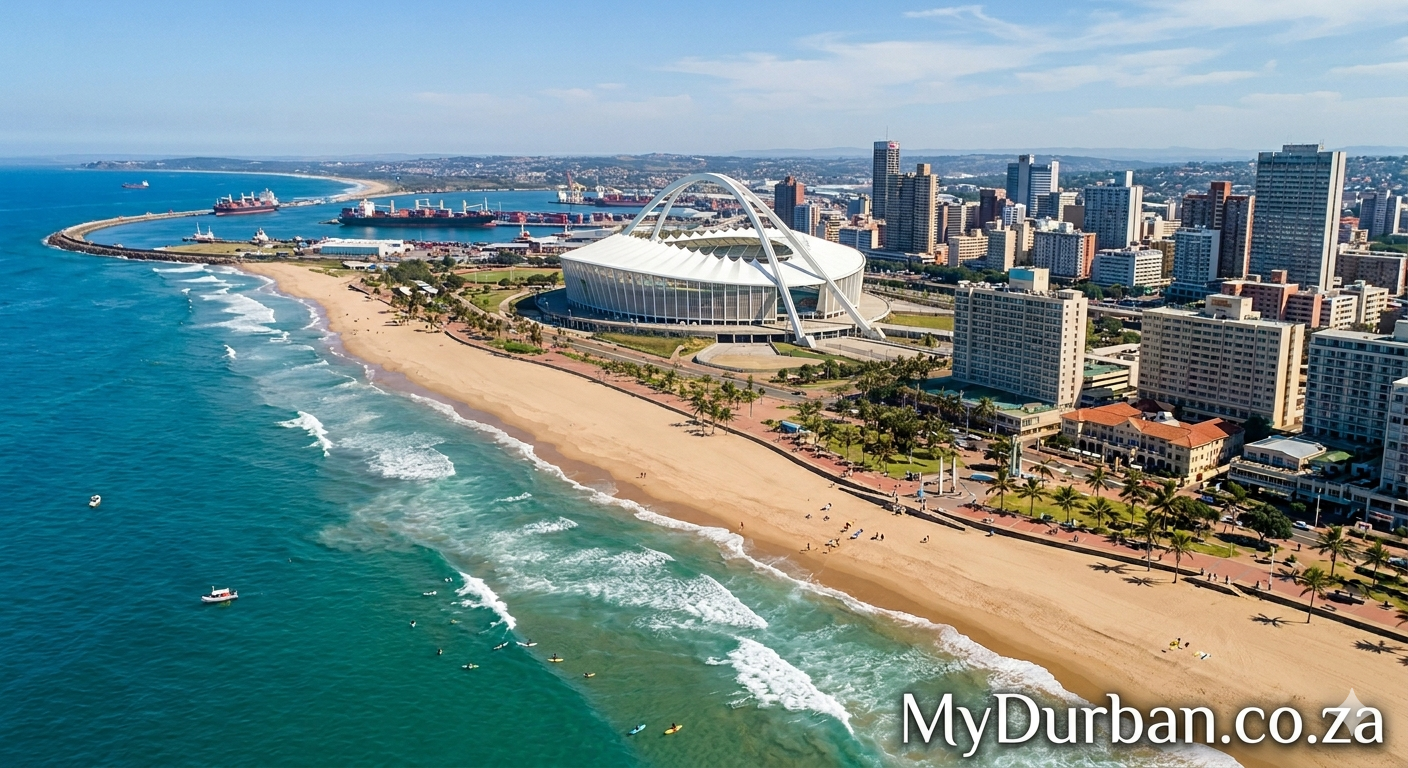
A “Valley of 1,000 Hills” image from Flickr – click on the name of the photographer below to see more Durban goodness and to thank the photographer.
The beauty of Dzungarian Alatau mountain range
Photo by torekhan

Dzungar Alatau is a mountain system, which occupies 700 sq. km, and is situated at the border of two big mountain systems Eastern Tien Shan and Altai. Dzungar Alatau is divided in two parts: region of the Lepsy river, and region of the Usek river. The highest summit is peak of Semenov-Tienshanski located at the Kazakhstan-Chinese border at the altitude of 4.622 m above sea level. Not far from the border there is a mountain pass with a width of 10 to 50 km called Dzhungarski Gate. Semi desert, which turns into steppe stretchs up to the altitudes of 2.600 m, above which there are Alpine meadows. A narrow ridge of Dzhungar Alatau with sharp peaks and steep slopes has lots of rocky precipices with a height of 400-1000 m. Above the altitude of 3.500 m the ridge is covered with eternal snow and glaciers. Mountain valleys are narrow and up to 800-1.000 m deep, most mountains are difficult to access.
The climate is temperate continental. Winter day temperature is -5-6°C, night one is -15-25°C. Summer day temperature is +20+25°C, night temperature is +5+7°C. The region is sparsely populated. The real masters of this wild region are red wolves, bears, Siberian stags, wild Chalyn rams, and countless rodents. Observant tourists will definitely meet one of these animals.
Trekking is particularly good in the region of Lepsy, Baskan, Aksu lakes, around the mountain lakes Zhasylkol and Bolshoye. Mountains Kokpek, Taurly and Bezymyannyj passes, peak of Semenov-Tienshanski, Volchiy and Banditskiy passes are worth trekking as well
Click here to submit your News – free.
Have you tried: Videos From PE?
Quick Durban KwaZulu-Natal Fact: Climate – KwaZulu-Natal has a varied, yet verdant climate, thanks to diverse, complex topography. Generally, the coast is subtropical with inland regions becoming progressively colder. Durban, on the south coast, has an annual rainfall of 1009mm, with daytime maxima peaking from January to March at 28°C (min: 21°C), dropping to daytime highs from June to August of 23°C (min: 11°C). Temperature drops towards the hinterland, with Pietermaritzburg being similar in the summer, but much cooler in the winter. Ladysmith in the Tugela River Valley reaches 30°C in the summer, but may drop below freezing point on winter evenings. The Drakensberg can experience heavy winter snow, with light snow occasionally experienced on the highest peaks in summer. The Zululand north coast has the warmest climate and highest humidity.
Watch a Video:

 Mpumalanga artists won’t join protest