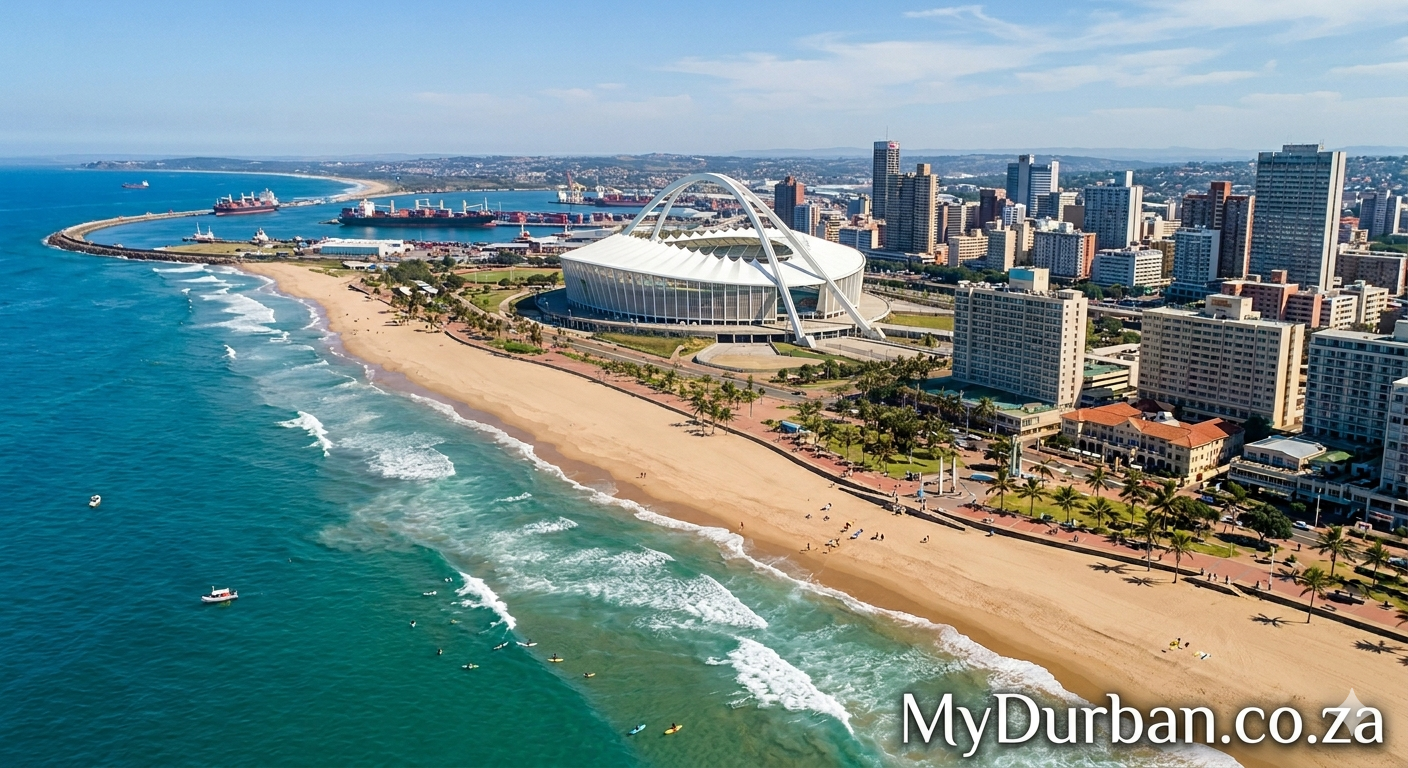
A “Valley of 1,000 Hills” image from Flickr – click on the name of the photographer below to see more Durban goodness and to thank the photographer.
More monastic ruin
Photo by Can Pac Swire

Glendalough, Co. Wicklow, Ireland.
xxxx
Glendalough (glen = valley in Celtic, lough/ loch = lake, Glendalough = valley of the lakes) was an Early Celtic Christian monastery founded by St. Kevin in the 6th century. It flourished for over 600 years well into the 1200s. During its heyday, Glendalough included church buildings, a cathedral, a round tower, workshops, an infirmary, farm buildings and dwellings for both the monks and a large lay population; it was also a centre of learning, and manuscript copying and writing.
It was badly damaged by English troops in 1398. Its final demise happened around the Dissolution of the Monasteries in 1539 (blame Henry VIII).
Kevin of Glendalough’s life was not well-documented. He was said to have been born in 498 AD, out of one of the ruling families of Leinster. He studied priesthood and later founded the Glendalough monastery in the 6th century. He lived his life at Glendalough as a hermit monk, minimising outside contact. Nevertheless, his reputation as a holy man spread, and followers paid pilgrimage at Glendalough for centuries. St. Kevin supposedly died in 618 AD, suggesting that he lived for 120 years!
Click here to submit your News – free.
Have you tried: Reach Trust for Solar and Building Management?
Quick Durban KwaZulu-Natal Fact: KwaZulu-Natal Economy – Durban is a rapidly growing urban area and is by most measures the busiest port in Africa, with a good rail network linking into Southern Africa. Sugar refining is the main industry. Sheep, cattle, dairy, citrus fruits, corn, sorghum, cotton, bananas, and pineapples are also raised. There is an embryonic KwaZulu-Natal wine industry. In addition to sugar refining, industries (located mainly in and around Durban) include textile, clothing, chemicals, rubber, fertilizer, paper, vehicle assembly and food-processing plants, tanneries, and oil refineries. There are large aluminium-smelting plants at Richards Bay, on the north coast. The province produces considerable amounts of coal (especially coke) and timber. About 82% of the population is black. During apartheid, a large percentage were forced to live in Bantu homelands (Bantustans), which had a subsistence economy, based on cattle raising and corn growing. Wildlife and tourism is increasingly important to the economy of KwaZulu-Natal. Tourists pay up to $ 10,000 for safaris on which they might see lions, elephants and giraffes.
Watch a Video:

 S. African police arrest five suspects in murder of football icon