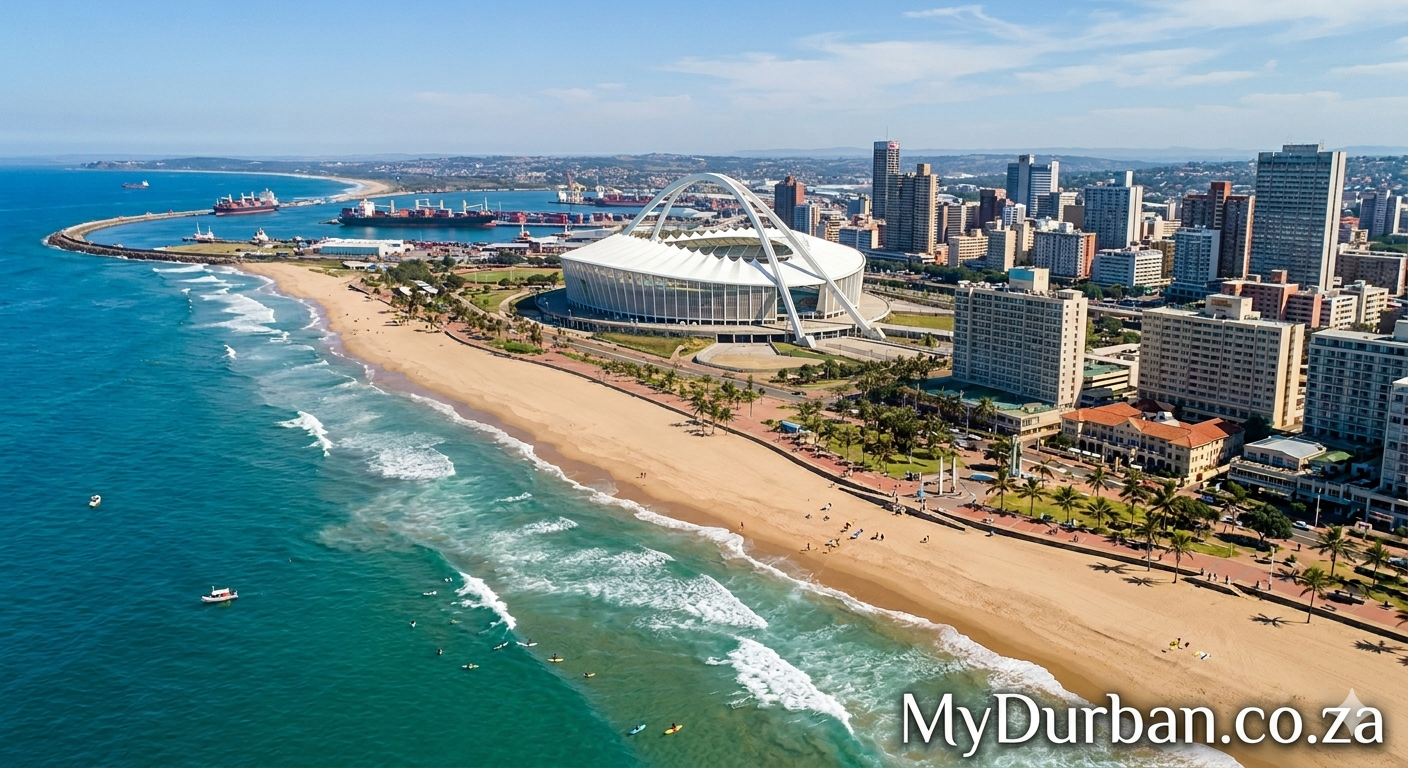
A “Valley of 1,000 Hills” image from Flickr – click on the name of the photographer below to see more Durban goodness and to thank the photographer.
Jasper Beads
Photo by A.Davey

Wikipedia says:
Kuntur Wasi (Quechua kuntur condor, wasi house, "condor house") is the name given to the ruins of a religious center with complex architecture and stone sculptures, located in the Andean highlands of Peru.
It is believed the inhabitants had a link with the Chavín culture.
Kuntur Wasi is located in the Northern Mountain Range of Peru, specifically at the headwaters of the Jequetepeque River, in the region of the city of Cajamarca near the small town of San Pablo. The Jequetepeque valley provided a transportation corridor between the coastal region and the highlands.
Kuntur Wasi was a center where people congregated.
It is thought to have been constructed around 1000-700 BCE, during the Initial Period. The architecture consists of a hill-top temple, quadrangular platforms, a sunken courtyard, and series of rooms.
In the floor of one room there is an anthropomorphic figure made of clay, about 30 inches (75 cm) in height. It is painted with cinnabar red, malachite green, and black, yellow, and pink. Its face has big square eyes and a wide mouth with prominent canine teeth. There are also stepped platforms and funeral structures.
Lithosculptures have been found, similar to the Chavín style.
Kuntur Wasi was occupied between the years 1200-50 BC.
It was first discovered in 1945 by Julio C. Tello. In 1989, scientists from the University of Tokyo excavated four tombs at Kuntur Wasi. Valuable items, such as pectoral necklaces (decorative breastplates), gold crowns, ornamental stone beads, earrings, sets of dishes and iconographies of people were discovered in the burial area.
Since the beginning of the University of Tokyo’s archaeological mission, eight tombs have been found in the area.
The Kuntur Wasi Museum, managed by local citizens, opened in 1994.
—————
Según Wikipedia:
Kuntur Wasi es un sitio arqueológico que data del Formativo Inferior, se encuentra ubicado en el centro poblado del mismo nombre, en la provincia de San Pablo, en el departamento de Cajamarca, en el Perú.
En la lengua quechua Kuntur Wasi significa "Casa del Cóndor". Según el arqueológo japonés, Yoshio Onuki, estudioso principal de este sitio arqueológico, Kuntur Wasi es una expresión prechavín pero que posteriormente posee una gran influencia no solo de Chavín sino también de Cupisnique especialmente en la orfebrería y la cerámica.
Kuntur Wasi pasó por los siguientes periodos:
Fase Ídolo: Construcción del centro ceremonial con pisos enlucidos con cal de color blanco. En esta fase hay una cierta relación con Huacaloma y Pacopampa.
Fase Kuntur: Construcción de un nuevo complejo ceremonial en forma de U. Se desarrolla la cerámica fina y la orfebrería.
Fase Copa: Modificación del complejo arquitectónico ceremonial y la renovación del sistema de canales de drenaje.
Fase Sotera: Existe una relación con la Fase Layzón del valle de Cajamarca. Corresponde a la decadencia de Kuntur Wasi.
Click here to submit your News – free.
Have you tried: Travelling to South Africa?
Quick Durban KwaZulu-Natal Fact: The Gateway Shopping Centre has more than 350 stores, 70 restaurants, 18 movie theatres, an IMAX theatre, an indoor climbing rock and even a skate park designed by Tony Hawk making it the biggest shopping centre in Africa.
Watch a Video:

