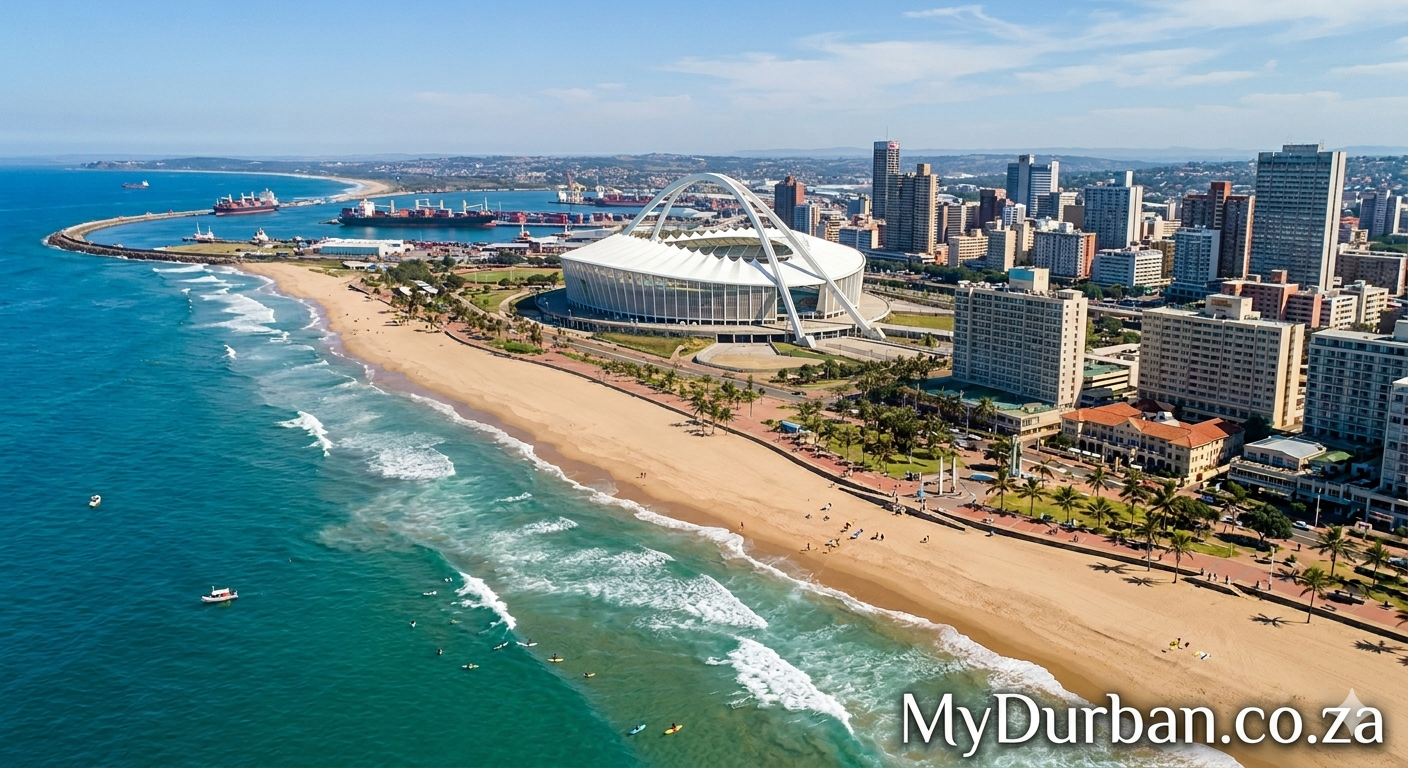
A “Durban Sailing” image from Flickr – click on the name of the photographer below to see more Durban goodness and to thank the photographer.
Image from page 5 of “S.A. mining and engineering journal” (1891)
Photo by Internet Archive Book Images

Identifier: v22p1saminingeng1100joha
Title: S.A. mining and engineering journal
Year: 1891 (1890s)
Authors:
Subjects: Mineral industries Mining industry and finance Mines and mineral resources
Publisher: Johannesburg
Contributing Library: Gerstein – University of Toronto
Digitizing Sponsor: University of Toronto
View Book Page: Book Viewer
About This Book: Catalog Entry
View All Images: All Images From Book
Click here to view book online to see this illustration in context in a browseable online version of this book.
Text Appearing Before Image:
Text Appearing After Image:
m UnionCastleLine. Sailings betweenSouth Africa andthe United King-dom by theWesiernRoute (via Madeiraand ihe Canary Is-lands), and by theEastern Route (via$ u«,. ROYAL MAIL STEAMERS sail humewardf. frr,,,, I)„rha.,every Thursday, and from Capetown every Wednesday afteruoun,klliQg at Madeira. INTERMEDIATE STEAMERS are despatched each week forEngland via La» Palmas or Teneriffe) taking passengere at lowerrates than by the Mail Steamers. Calls are made at Lobito Bay,St. Helena and Ascension at stated intervals. EAST COAST SERVICE.—Monthly sailings homewards viaEast Coast Ports and the Suez Canal, calling at Delagoa Bay,Beira, Chinde, Mozambique, Port Amelia, Zanzibar, Mombasa(Kilindini), Aden, Port Sudan, Suez, Port Said, Naples, Marseilles,and Gibraltar for London. This service both outwards and home >. .rU in its at Natal with tho Mail Service via the WesternRoute. Passengers embarking at Durban and proceeding overlandfrom Marseilles to England, can effect the journey in about
Note About Images
Please note that these images are extracted from scanned page images that may have been digitally enhanced for readability – coloration and appearance of these illustrations may not perfectly resemble the original work.
Click here to submit your News – free.
Have you tried: Videos From PE?
Quick Durban KwaZulu-Natal Fact: Climate – KwaZulu-Natal has a varied, yet verdant climate, thanks to diverse, complex topography. Generally, the coast is subtropical with inland regions becoming progressively colder. Durban, on the south coast, has an annual rainfall of 1009mm, with daytime maxima peaking from January to March at 28°C (min: 21°C), dropping to daytime highs from June to August of 23°C (min: 11°C). Temperature drops towards the hinterland, with Pietermaritzburg being similar in the summer, but much cooler in the winter. Ladysmith in the Tugela River Valley reaches 30°C in the summer, but may drop below freezing point on winter evenings. The Drakensberg can experience heavy winter snow, with light snow occasionally experienced on the highest peaks in summer. The Zululand north coast has the warmest climate and highest humidity.
Watch a Video:
