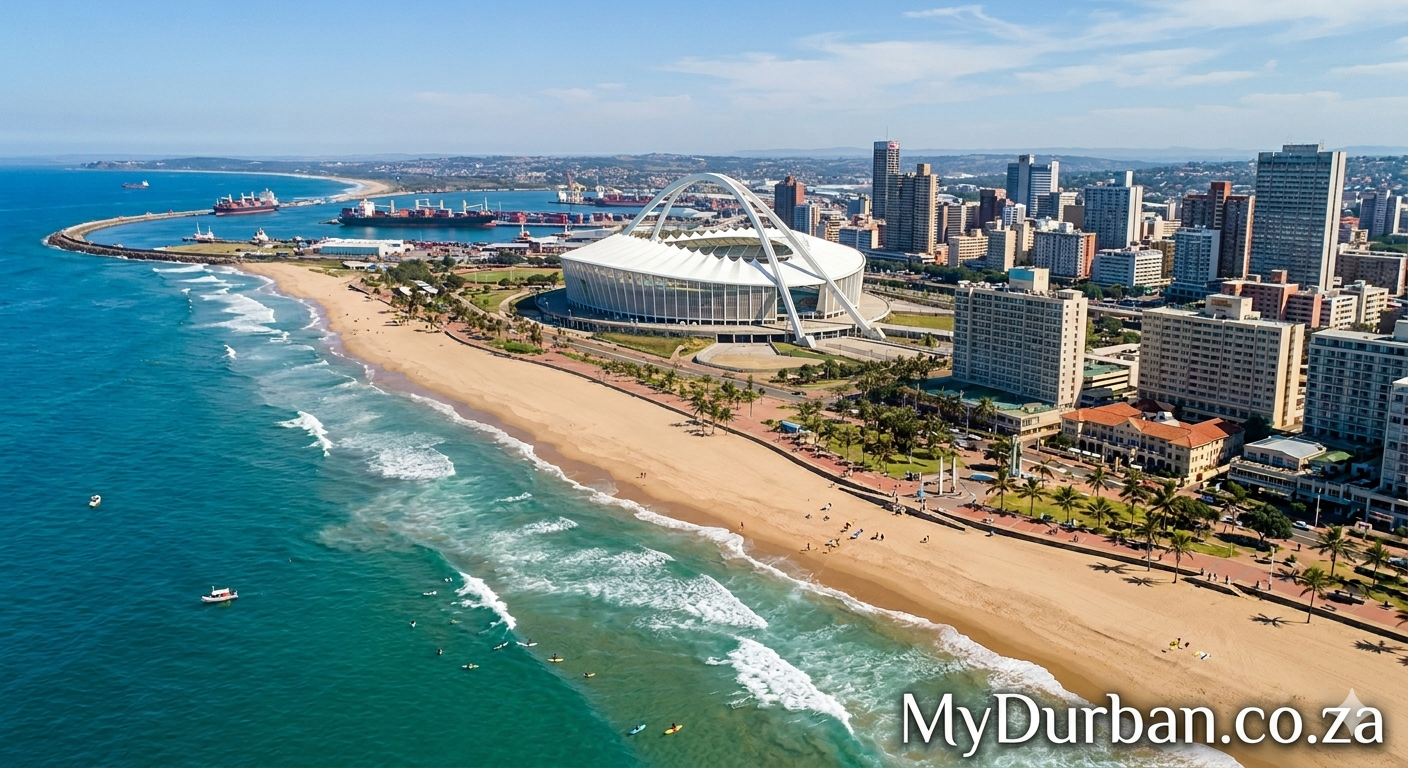
A “Valley of 1,000 Hills” image from Flickr – click on the name of the photographer below to see more Durban goodness and to thank the photographer.
A section of the Colorado River Aqueduct delivers water to the Whitewater River recharge area northwest of Palm Springs. Denise Goolsby/The Desert Sun
Photo by clamshack

History: Coachella Valley central to aqueduct project
Denise Goolsby, The Desert Sun 11:19 p.m. PDT June 7, 2014
The lifeblood of greater Los Angeles runs through the Coachella Valley, coursing through a series of tunnels bored into the rugged foothills of the San Jacinto Mountains.
The 242-mile Colorado River Aqueduct — constructed between 1933 to 1941 by the Metropolitan Water District of Southern California — stretches from Parker Dam at the Arizona border to Lake Mathews in western Riverside County, providing drinking water to millions of residents of Los Angeles and the surrounding counties.
The 242-mile aqueduct, built from 1933 – 1941, provided badly needed jobs for the Coachella Valley during the Depression Denise Goolsby/The Desert Sun
Also known as the Metropolitan Aqueduct, "It was one the biggest public works projects in the country during the Depression," historian Pat Laflin said.
The Los Angeles Basin was already receiving water from the Owens River, but just 10 years after the 233-mile Los Angeles Aqueduct (Owens Valley aqueduct) was completed in 1913 it became apparent the Sierra Nevada watershed was not adequate to fill the aqueduct in a dry cycle, Laflin said.
The men of the Los Angeles Department of Water and Power looked to the east for a new source of water to support the throngs of settlers flooding into Los Angeles.
They decided their only chance to sustain the growth of the area — Los Angeles had become a city of major manufacturing importance and a port of the first magnitude — was to tap into the Colorado River.
In 1928, a group, led by William Mulholland — the driving force behind the Los Angeles Aqueduct — organized the Metropolitan Water District of Southern California.
The district, formally created by the state Legislature, would be responsible for the planning, building and funding of the Colorado River Aqueduct.
In 1931, voters living in the district approved a 0 million bond issue for construction of the aqueduct, which would require 29 tunnels covering 92 miles to be blasted through the solid core of mountains.
There would be four dams and five pumping plants built to lift the water 1,600 feet along its journey to the terminal reservoir near Riverside.
The project employed more than 30,000 people over an eight-year period and was a boon to the local communities, especially Indio.
The project was officially underway in January of 1933.
The Jan. 13, 1933 issue of the local newspaper, The Date Palm, reported, "Aqueduct camps being established daily in the hills near Indio."
By April, 1933, the paper reported that six aqueduct camps of men were working in the hills near Indio. Permanent camps were located at Wide Canyon, 1000 Palms Canyon, Pushawalla Canyon, Berdoo Canyon, Fargo Canyon and Yellow Spot.
Berdoo Camp, the one most often mentioned by The Date Palm, can be reached by a side road that leads into San Bernardino Canyon from Dillon Road.
One of the largest buildings at the camp was a 27-bed hospital. Other camps only had emergency first aid stations. Accident and other cases were brought by ambulance to Berdoo Camp.
The hospital was staffed by a surgeon/medical officer, an assistant surgeon and 14 registered male nurses. The air-conditioned hospital was equipped with a modern operating room, X-ray plant, diet kitchen and general offices. Each employee was charged five cents per working day for medical care. The men made to a day on average.
At least 25 men died while working on the Coachella Valley section of the aqueduct. Falls, crushings and heat prostration were among the causes.
As work ended at each of the camp sites and crews moved on to the west, the camps were dismantled. Some buildings were moved intact. Many were dismantled for salvage.
Thermal date farmer Ben Laflin ran a salvage business during the time the aqueduct was being constructed.
"This was the Depression and farming wasn’t very profitable," his son, Ben Laflin Jr. said. The elder Laflin contracted to buy a lot of the timber, lumber and railroad ties being disposed of as the tunnel work was finished.
"There would be big piles of this disposed material up at the entrances into the different sections of the tunnel," Laflin, 92, of Bermuda Dunes said. "I remember stacking an awful lot of lumber as a kid. My dad and I would go up in the truck and either truck it down to the ranch or take it directly to people who had ordered timber and ties. We took the materials to buyers everywhere from Los Angeles to Kingman, Arizona and points east."
Some of the Colorado River water is distributed to the Coachella Valley.
The Desert Water Agency and the Coachella Valley Water District have entitlements to State Water Project water supplies from Northern California, but lack any physical connection to its facilities.
In order to enable DWA and CVWD to obtain water equal to their SWP entitlement, Metropolitan Water District swaps an equal quantity of its Colorado River water for the agencies’ SWP water. The water is released from the aqueduct near the Whitewater River recharge area, providing water to the upper Coachella Valley groundwater basin.
Source: Pat Laflin, Coachella Valley History Museum in Indio
Click here to submit your News – free.
Have you tried: Visiting Port Elizabeth?
Quick Durban KwaZulu-Natal Fact: Durban was originally called Rio de Natal by Vasco da Gama when he visited in 1497. Natal in Portuguese means “Christmas.” Durban later received its name from a somewhat controversial governor from the Cape colony, Sir Benjamin D’Urban)
Watch a Video:

 Centre’s Keeping You Informed & Updated!