Durban in the News:
Anger as Ace alters step-aside rules: Outraged provincial secretaries called for a meeting with LuthuliHouse after the ANC secretary general broadened the NEC’s step-aside resolution …
Online event for art lovers to mark 152nd anniv of Kasturba Gandhi: To observe 152nd anniversary of Kasturba Gandhi, an online event will be held for art lovers. A painting, sketching and poem competition will be held on topic Women’s Struggle for Emancipation, …
After gifting herself with a Rolls-Royce, MaMkhize gifts poor with homes: In celebration of 20 years in the construction industry, Shauwn “MaMkhize” Mkhize decided to build 20 homes for the needy.
Newcastle boost survival bid as Willock dents West Ham’s top four hopes: Newcastle moved closer to Premier League survival after Joe Willock’s late goal capped a thrilling 3-2 win against 10-man West Ham.
Questions around Lindani Myeni’s killing in Hawaii: Police body cam footage show officers shining a torch in Myeni’s eyes, and then ordering him to lie down without identifying themselves.
WATCH | Limpopo teenager laid to rest: Fifteen-year-old Lufuno Mavhunga from Mbilwi Secondary School near Thohoyandou, was assaulted by a fellow pupil, while others watched and laughed.
One person killed, one injured in Durban crash: One person died on Saturday and another person was injured when three vehicles collided on the M7 in Durban, KwaZulu-Natal paramedics said.
Click here to submit your News – free.
Have you tried: Videos From PE?
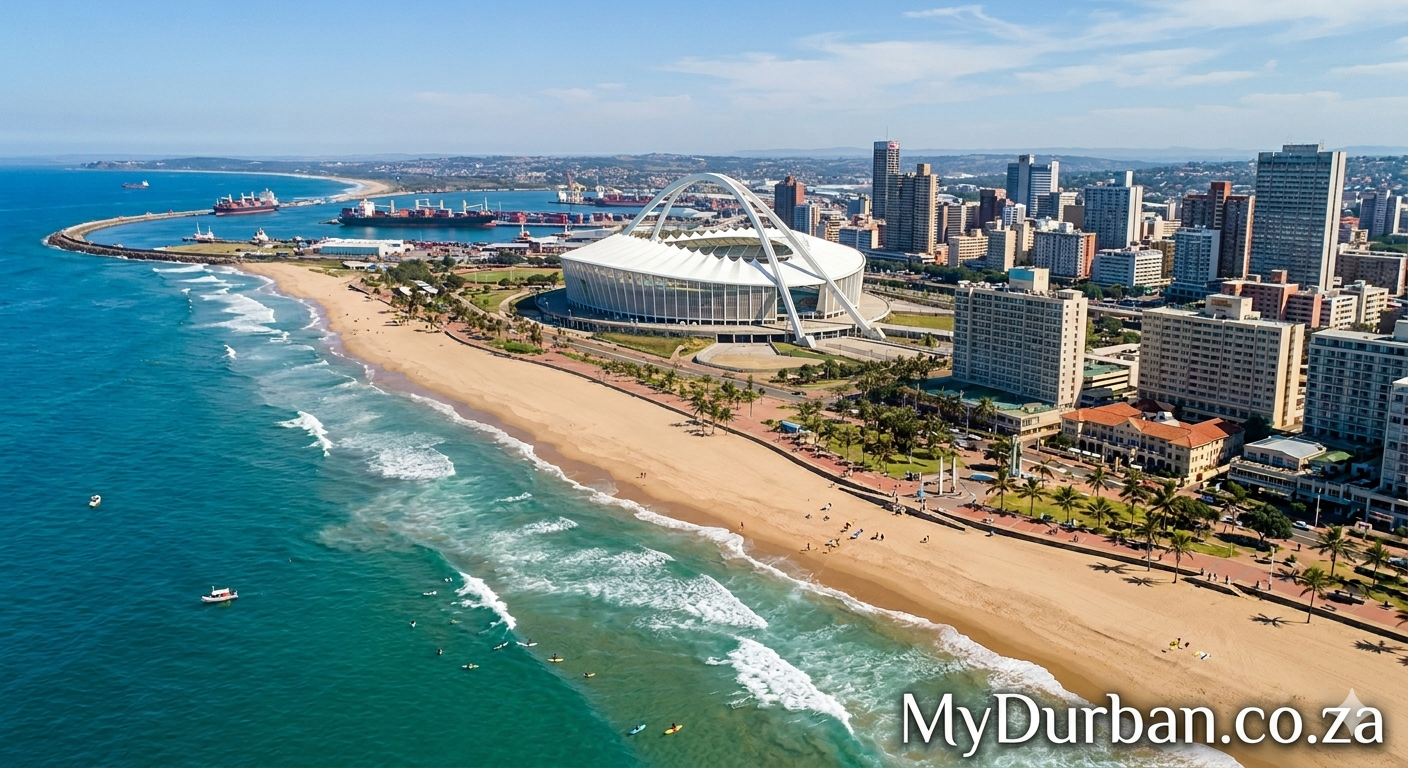
Quick Durban KwaZulu-Natal Fact: KwaZulu-Natal Economy – Durban is a rapidly growing urban area and is by most measures the busiest port in Africa, with a good rail network linking into Southern Africa. Sugar refining is the main industry. Sheep, cattle, dairy, citrus fruits, corn, sorghum, cotton, bananas, and pineapples are also raised. There is an embryonic KwaZulu-Natal wine industry. In addition to sugar refining, industries (located mainly in and around Durban) include textile, clothing, chemicals, rubber, fertilizer, paper, vehicle assembly and food-processing plants, tanneries, and oil refineries. There are large aluminium-smelting plants at Richards Bay, on the north coast. The province produces considerable amounts of coal (especially coke) and timber. About 82% of the population is black. During apartheid, a large percentage were forced to live in Bantu homelands (Bantustans), which had a subsistence economy, based on cattle raising and corn growing. Wildlife and tourism is increasingly important to the economy of KwaZulu-Natal. Tourists pay up to $ 10,000 for safaris on which they might see lions, elephants and giraffes.
Watch a Video:

 FS to experience power reduction