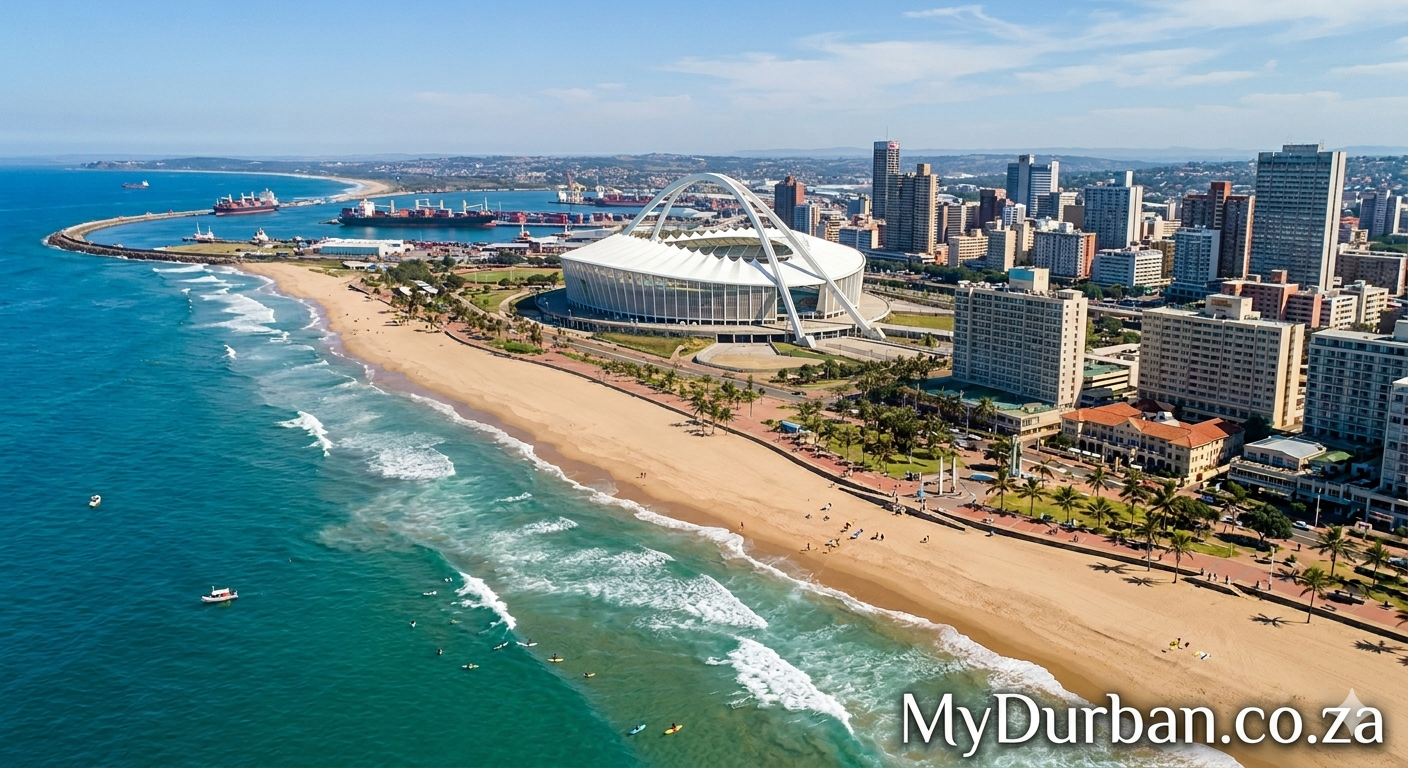
The wait is over…the final field for the Hollywoodbets Durban July 2026 has officially been announced. As always, Durban’s biggest day on the sporting and social calendar is s …
Click HERE: to read the full article titled, All bets are on! The final field for this year’s Durban July has been announced.
Submit Your MyDurban News HERE
Durban City Centre:
The English traders under the leadership of Farewell and company arrived in 1824 and after receiving permission from the mighty King Shaka kaSenzankhona, began trading with the local Zulu’s for ivory and animal skins.
When the ivory became scarce thanks to over-hunting, the small group of settlers turned to agriculture and so started the sugar cane industry in South Africa.
The fertile land and sizeable sugar sane fields brought both prosperity and stability to the region and so more people flooded the dirt streets and Durban and development stared.
Pretty soon, buildings were going up right left and center. Two of the best example of Edwardian neobaroque classical architecture are to be found in the Durban, the “Post Office Building” and “City Hall”.
The architectural style of the buildings echoed the prosperity of the region and included Zulu imagery – check out the allegorical figures above the main entrance.
But it’s not just those two buildings. Directly opposite city is the Cenotaph as well as the memorials to the Anglo Boer Wars, and various statues to early city founders as well as Queen Victoria.
Nearby is the Church Street markets with the flower sellers, the herb traders as well as the fresh fruit and vegetable sellers.
The Old Court House is nearby as well, and the science museum, Durban Art Gallery and Durban library are all nestled together.
In terms of culture, this is the perfect spot to admire the British determination to surround themselves with a bit of home.

 Ballito Pro 2026 Announces Unifying Festival Line-up in KwaDukuza for 57th Edition